PAGE 04 · FREQUENTLY ASKED
The questions readers actually arrive with.
What the regulatory record says, in plainer language than the regulators use.
Is TB-500 legal in the United States?
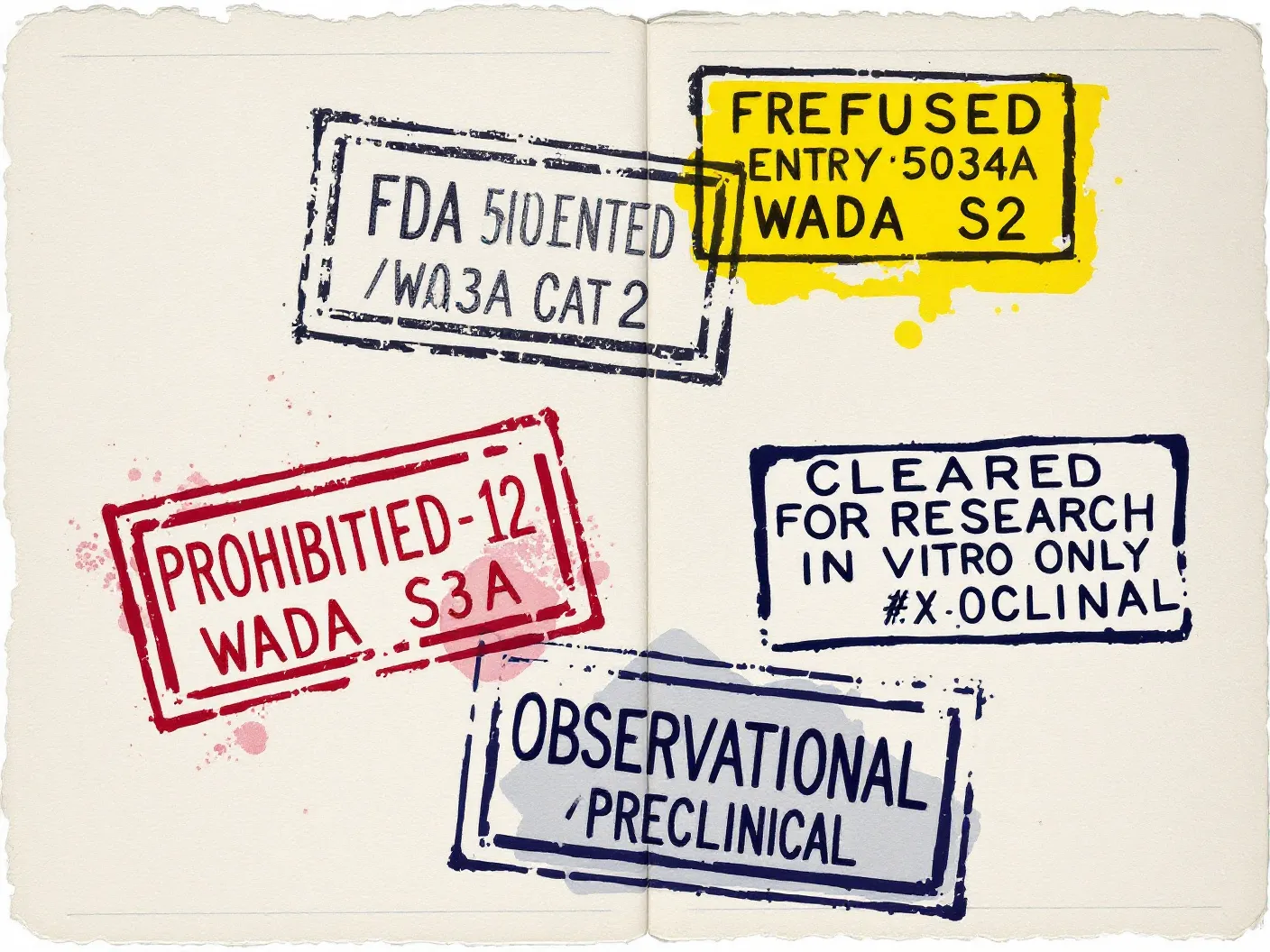
TB-500 is not approved by the FDA for any human indication, and the FDA has not authorized any human medical use of the molecule. It is also not currently scheduled as a controlled substance under the federal Controlled Substances Act or under the controlled-substance acts of California, Texas, New York, or Florida. Those two facts together produce the narrow legal posture under which TB-500 is sold in the United States: as a research chemical for in vitro use only, outside the FDA's drug-marketing jurisdiction. FDA placed TB-500 in Category 2 of the interim 503A bulks list in September 2023, citing what it termed 'significant safety risks' [20]. The agency's page, content current as of April 22, 2026, now shows that the nominator took back the request and TB-500 is no longer in Category 2; it has not stated there whether a licensed compounding pharmacy may use the substance. The agency has issued warning letters to US suppliers marketing TB-500 for human use at intervals between 2017 and 2023.
Is TB-500 a controlled substance under state or federal law?
No. As of the current writing, TB-500 is not listed as a controlled substance under the federal Controlled Substances Act and is not scheduled under the controlled-substance acts of the four largest US states by population. Controlled-substance scheduling and FDA approval status are separate regulatory tracks: a substance can be unapproved by the FDA without being scheduled by the Drug Enforcement Administration. The absence of scheduling does not constitute regulatory endorsement. The FDA's Category 2 placement on the 503A bulks list [20] and the WADA Prohibited List status [21] both apply independent of any DEA scheduling decision.
Why is TB-500 no longer in FDA's Category 2 table?
Section 503A of the Federal Food, Drug, and Cosmetic Act governs traditional patient-specific pharmacy compounding. The provision permits compounders to use bulk drug substances only when the substances meet specific criteria. The FDA maintains a tiered interim list of nominated substances: Category 1 substances are under evaluation and may be used while review proceeds; Category 2 substances have been reviewed and found to present significant safety risks. In 2023 the FDA placed TB-500, alongside BPC-157 and several other research peptides, in Category 2 [20]. The classification followed a multi-year FDA review of bulk peptides nominated for compounding and reflected concerns about purity, identity, characterization, and the absence of approved human use. Licensed compounding pharmacies that prepare TB-500 are operating outside the 503A framework.
Is TB-500 banned by WADA, USADA, the IOC, or the NCAA?
Yes — by every WADA-aligned anti-doping authority, in every context the World Anti-Doping Code reaches. The WADA 2025 Prohibited List explicitly names 'TB-500' and 'thymosin-β4' under section S2 (Peptide Hormones, Growth Factors, Related Substances and Mimetics), prohibited at all times — in competition and out of competition [21]. The S0 catch-all (Non-Approved Substances) also applies, because the molecule has no marketing authorization in any jurisdiction. USADA, the IOC, the IPC, the World Athletics Anti-Doping Rules, FIFA, and the national anti-doping organizations that have adopted the Code all enforce the same list. The NCAA and most US professional sports leagues maintain banned-substance lists that incorporate WADA-listed peptide hormones and growth factors, although the exact scope and sanctions vary by league. Military and first-responder drug-testing programs that adopt WADA-aligned panels — including programs run by US Special Operations Command — likewise screen for the substance.
What sanction does an athlete face for using TB-500?
Under the World Anti-Doping Code, a first offense involving a non-specified substance such as TB-500 carries a mandatory four-year period of ineligibility unless the athlete establishes no significant fault or negligence. Possession is sufficient grounds for sanction — an in-competition positive test is not required. The USADA case against weightlifter Michael Nackoul resulted in a four-year ineligibility for possession of prohibited growth factors including Thymosin Beta-4, and the case was published as deterrent precedent [22]. Sanctions vary by sport and by tribunal: prompt admission, substantial assistance, or contaminated-supplement defenses can reduce the period in specific cases, but the published TB-500 sanction record reflects multi-year ineligibility periods as the typical outcome.
Why can compounding pharmacies no longer make TB-500?
Compounding pharmacies in the United States operate under two statutory frameworks. Section 503A of the FD&C Act covers traditional patient-specific compounding; Section 503B covers outsourcing facilities that produce larger batches. Both pathways require that any bulk drug substance used in compounding meet specific eligibility criteria. The FDA's interim 503A bulks list is the mechanism by which the agency communicates which nominated substances may be used while review is in progress. FDA's page now records that the TB-500 nomination was withdrawn, rather than showing the substance in Category 2 [20]. That table entry does not establish whether a 503A or 503B pharmacy may use the ingredient. TB-500 was placed on Category 2 in 2023. Licensed compounding pharmacies that continue to prepare TB-500 after that date are operating outside the FDA's compounding framework and have been the subject of agency enforcement letters.
What does mean on a TB-500 label?
The phrase is a legal-marketing convention, not a quality assurance. By labeling a substance for non-human, in vitro research use only, a supplier remains outside the FDA's jurisdiction over drug marketing — the agency regulates substances marketed for use in or on the human body. The label does not assert that the substance is intended for human use; it explicitly disclaims that intention. The phrase also does not certify that the substance was manufactured under Good Manufacturing Practice, that lot-release testing was performed, that endotoxin or sterility specifications were met, or that the substance is what the label says it is. The Category 2 placement on the 503A bulks list [20] and the published controversies about purity, identity, and adulteration in research-chemical channels are independent of how the label reads.
How is TB-500 detected in doping-control samples?
The validated detection method most-cited in racing and human anti-doping work is liquid chromatography–mass spectrometry. Esposito and colleagues published a validated LC-MS method for TB-500 in equine urine and plasma after intravenous administration in 2012, and the method is in routine use by horse-racing laboratories [15]. Human anti-doping laboratories accredited under the WADA International Standard for Laboratories operate equivalent peptide-detection panels under the agency's technical document for biomarker and peptide hormone analysis. The detection window after a single dose depends on dose magnitude, route of administration, individual pharmacokinetics, and the analytical sensitivity of the laboratory, and the published window has not been comprehensively characterized in humans.
Is TB-500 the same molecule as Thymosin Beta-4?
No. TB-500 is a synthetic seven-amino-acid peptide with the sequence Ac-LKKTETQ-OH, corresponding to residues 17–23 of human Thymosin Beta-4 (Tβ4), the 43-amino-acid intracellular peptide encoded by the X-linked TMSB4X gene. The fragment carries the conserved LKKTET central motif that mediates G-actin binding in the parent peptide. The fragment lacks the C-terminal α-helix that crystallographic work has identified as the principal structural determinant of high-affinity actin sequestration in the parent [22]. Vendor literature treats the two molecules as interchangeable, but every registered human clinical trial of 'thymosin beta-4' has used the full 43-amino-acid recombinant protein. The synthetic seven-amino-acid TB-500 fragment has never been evaluated in a registered human clinical trial. The science transfer from full-length Tβ4 to the fragment is plausible for some endpoints — preserved corneal-healing activity has been demonstrated for short LKKTET-containing constructs [16] — but is not established.
What does the published research actually say about TB-500?
Published research on TB-500 itself — the synthetic seven-amino-acid fragment — is narrow. Esposito and colleagues established a validated LC-MS detection method in equine urine and plasma [15]. The class of LKKTET-containing constructs has been characterized in rodent corneal-injury models [16]. The published clinical and preclinical efficacy literature commonly cited in connection with 'TB-500' is in fact the literature on full-length recombinant Tβ4: G-actin sequestration through the LKKTET motif [22]; HIF-1α stabilization and VEGF induction [1]; Notch-dependent angiogenesis [3]; NF-κB inhibition [4]; PINCH–ILK–Akt cardiomyocyte survival [10]; topical corneal repair [6]; rat TBI [7]; rat stroke [8]; adult epicardial progenitor mobilization [9]; the AcSDKP antifibrotic axis [19]; and the negative porcine cardiac IR-injury result [11]. The clinical-development program for the parent peptide remains active in ophthalmic and cardiac indications [13][14] but has not produced a regulatory-grade efficacy result.
Does Customs and Border Protection intercept TB-500 shipments?
US Customs and Border Protection intercepts shipments of unapproved drug substances that arrive in the United States from international suppliers. The agency's enforcement priorities include unapproved peptide research chemicals shipped to consumer addresses. Published enforcement data do not break out interception rates by peptide identity, and the interception pattern is therefore best documented through agency enforcement-action notices and importer warning letters rather than aggregate statistics. Shipments marked as 'research chemical for in vitro use only' from overseas suppliers may be detained, refused, or destroyed at the discretion of CBP and the FDA, and personal-use exemptions that apply to certain prescription drugs do not extend to substances on the FDA's 503A Category 2 list [20].
Is TB-500 banned for racehorses?
Yes. Horse-racing authorities worldwide treat TB-500 as a prohibited substance under the International Federation of Horseracing Authorities International Agreement on Breeding, Racing and Wagering, Article 6 (Clause 10). The validated LC-MS detection methods for TB-500 in equine urine and plasma published by Esposito and colleagues [15] are in routine use by racing laboratories. Equine sanctions have been issued. The IFHA prohibition pre-dates and operates independently of the WADA Prohibited List, although the underlying rationale — that the substance is unapproved for any therapeutic use and is sold through research-chemical channels — is similar.
Is TB-500 unsafe?
The two published Phase I trials of full-length recombinant Tβ4 — Ruff 2010 in 40 US healthy volunteers up to 1,260 mg IV [12] and Wang 2021 in 84 Chinese healthy volunteers up to 25 μg/kg IV [23] — both reported acceptable safety with no dose-limiting toxicities and no serious adverse events. That body of data established the regulatory safety baseline for the parent peptide in carefully controlled clinical settings. It does not extend to the synthetic seven-amino-acid TB-500 fragment, which has not been studied in a registered human clinical trial, and it does not characterize the safety of substances obtained through unregulated research-chemical channels where Good Manufacturing Practice, lot-release testing, endotoxin control, and sterility assurance are not provided. The FDA's Category 2 placement on the 503A bulks list reflects the agency's finding that the substance presents 'significant safety risks' in compounding contexts [20]. Theoretical concerns about effects on occult or pre-existing tumors have been raised in the literature, although no clinical safety signal of tumor promotion has been reported in the published human Phase I/II data to date.
What is the difference between TB-500 and BPC-157 legally?
The two research peptides occupy a similar regulatory posture. Both were placed on FDA Category 2 of the interim 503A bulks list in the 2023 review [20]. Both are listed on the WADA Prohibited List 2025 under section S2 and the S0 catch-all [21]. Neither is approved for any human indication by any major regulatory authority. Neither is currently scheduled as a controlled substance under federal or major-state law. The most-cited difference lies upstream of the regulatory record: BPC-157 has a substantial body of rodent musculoskeletal-repair literature behind the synthetic peptide itself, while the published efficacy literature for 'TB-500' is in fact literature on the full-length 43-amino-acid parent protein, with the synthetic seven-amino-acid fragment never having entered a registered human clinical trial.